atans1

Archive for the ‘Corporate governance’ Category

Splitting the CEO and Chairman roles: It’s complicated …

In Corporate governance, Financial competency on 21/04/2013 at 6:20 am

if the firm is having performance problems; it’s not so helpful if everything is running smoothly. Our study showed that CEO-chairman separation tends to reverse a company’s performance: Low-performing firms benefit from a separation event, while high-performing firms suffer.

It also matters how the firm chooses to separate its top jobs. For the company to see this reversal of fortune, it has to go through what we call a “demotion” separation, whereby the CEO remains the same, but a new, independent chairman is appointed to oversee him or her.

http://www.businessweek.com/articles/2012-11-01/splitting-the-ceo-and-chairman-roles-it-s-complicated

Why S-Chips no hew our laws

In China, Corporate governance on 26/03/2013 at 5:46 am

Chinese no hue US laws.

Ned L. Sherwood won a proxy contest with the ChinaCast Education Corporation, an education company based in China that is incorporated in the United States, but the ousted executives subsequently transferred all the company’s valuable Asian assets, leaving Mr. Sherwood and the US public shareholders with nothing but a lawsuit in China. The deal highlighted the risks of investing in Chinese companies.

AND

Now some distressed debt investors get to find out what exactly it is you buy when you buy American-issued debt in a company incorporated in the Cayman Islands and doing business in China. I suspect the answer will be “not much.” http://dealbook.nytimes.com/2013/03/22/chinese-solar-giants-bankruptcy-presents-a-test/?nl=business&emc=edit_dlbkpm_20130322

But investors still buying these bonds.  http://blogs.reuters.com/breakingviews/2013/03/22/exposed-bondholders-suffer-solar-burns-in-china/

Citi sees shareholders* no ak, ignores their wishes

In Banks, Corporate governance, Temasek on 07/03/2013 at 5:37 am

Citigroup Makes Preparations for Profit-Sharing Plans Executives of Citigroup “stand to collect $579 million under profit-sharing plans that include the one shareholders voted against last year. The lender booked a $246 million expense in 2012 tied to the plans, adding to $285 million for the previous year and $48 million in 2010, according to regulatory filings,” Bloomberg News reports.

Charles Peabody, an analyst with Portales Partners LLC in New York, said the payouts are difficult to justify given last year’s shareholder rejection. Peabody, who told clients in a 2011 note that he was “dismayed” by the lack of stringent financial thresholds in that year’s plan, said today that Citigroup hasn’t done enough to tie pay to performance.

“The compensation plan was a travesty,” said Peabody, who has an underperform rating on the shares. “Citi’s board and management team continue to make a mockery of shareholder, political and regulatory demands that compensation reflect performance.” …The profit-sharing payouts are on top of annual salaries and bonuses granted to senior executives …

… Citigroup’s use of pretax profit to grant awards “sets the bar too low,” said Hodgson, the compensation analyst. “They’re not looking at anything else apart from pretax income, which is just not a good enough measure of a bank’s performance.”

*GIC still has a slug of Citi

Asean round-up

In Casinos, Corporate governance, Indonesia on 23/02/2013 at 6:49 am

The Philippine unit of Macau casino company Melco Crown Entertainment Ltd  said on Tuesday it plans to sell up to 1 billion shares as it prepares to develop a $1 billion casino-resort project with local partner Belle Corp.

Melco, run by Australian billionaire James Packer and the son of Macau gambling tycoon Stanley Ho, bought a 93% in Manchester, a formerly illiquid stock with investments in pharmaceutical and real estate businesses. Melco paid Manchester shareholders 1.3 billion pesos for the backdoor listing.

Melco and Belle, controlled by the Philippines’ richest man, Henry Sy, formalized their partnership in October.

Belle plans to build an integrated entertainment resort complex called Belle Grande Manila Bay, which features a 30,000-square-metre casino in a sprawling gaming complex being developed near Manila Bay. Melco will operate the casino.

There are three other groups with casino licences in the Philippines.

Financier Nathaniel Rothschild has lost his bid to oust the current board of coal mining giant Bumi, the company he helped to found.

Chairman Samin Tan survived a vote to remove him but informed the board he was stepping down.

Mr Rothschild had wanted to rejoin the company and expel 12 of the 14 board members, including the chief executive and chairman.Allegations of financial irregularities at Bumi’s key Indonesian operating subsidiary, PT Bumi Resources – in which it owns 29% alongside the Bakrie family – first emerged in September 2012 , after Mr Rothschild received information from a whistleblower.

Thailand’s economic growth exceeded expectations in the last three months of 2012 as it continued to recover from the previous year’s devastating floods.

Gross domestic product surged 18.9% in the October-December period, from a year earlier. Most analysts had forecast a figure close to 15%.

Compared with the previous quarter, the economy grew by 3.6%. But inflation is a concern.

Asean round-up

In Corporate governance, Indonesia on 26/01/2013 at 5:52 pm

Problems Chinese and British investors face.

Chinese investments in Burma

U/m extracted from BBC report:

– China has nearly $14bn of interests in Burma – one third of all foreign investment in the country

– About US$13bn of that has been invested since 2008

– Most investments are in hydro-electric power, oil and gas, mining, jade and teak

– Critics say a US$2.5bn project for twin oil and gas pipelines from the Bay of Bengal to western China will provide China with cheap energy while Rangoon continues to suffer power cuts

– In 2011 Burma halted a hydropower project, the Myitsone dam on the Irrawaddy river, which would have created a reservoir bigger than Singapore.

– There is a major row between villagers and a mining project that the Chinese have an investment in. The copper mine, is a joint venture between China’s Wanbao company – a subsidiary of the arms manufacturer, Norinco – and the business arm of the Burmese military,People have badly hurt protesting against the US$1bn expansion of thr copper mine.

Corporate governance row continues in Indonesia

Coal miner Bumi has said it is unable to substantiate claims of potential financial and other irregularities at its Indonesian operations.

Bumi is facing a battle for control after agreeing to a shareholder vote that will decide the future of the majority of its board members.The vote will take place in February, at a date to be named.

Nathaniel Rothschild, co-founder of Bumi, had demanded the vote in an attempt to return to the firm’s board. Mr Rothschild wants to oust 12 of the 14 board members and bring in new ones in an effort to turn the firm around.

He had quit the board last year amid a row with Indonesia’s Bakrie family.

Bumi owns a stake in key Bakrie assets and there have been tensions between the two over potential irregularities at one of the Bakrie firms.

The dispute revolves around Bakries’ Indonesian firm PT Bumi Resources, in which Bumi owns a 29% stake.

Mr Rothschild had called for a radical clean-up at the firm in 2011, leading to relations between the two being soured. Last year, Bumi began an inquiry into what it said were “potential financial and other irregularities” at the firm.

Then, the Bakrie family offered to buy back its assets from Bumi for an estimated $1.4bn (£870m) and split from the firm.

However, Mr Rothschild said the proposal was “not in the interests of minority shareholders” and resigned from the board.

The deteriorating relations between the two key shareholders have stoked fears about the future of the firm and hurt its share price. Its shares have plunged more than 65% in the past 12 months.

Bumi has also been hurt by a drop in coal prices, which has hurt its earnings and forced it to review its expansion plans.

Indons no “hue” UK governance rules

In Corporate governance, Indonesia on 28/12/2012 at 5:58 am

UK Takeover Panel is asking questions of Bakries and another Indon investor in Bumi for time being can only vote 29.9% of their shares.

http://www.guardian.co.uk/business/2012/dec/19/nat-rothschild-bumi-resume-conflict


Corporate governance Indon style cont’d

In Corporate governance, Energy, Indonesia, Uncategorized on 14/12/2012 at 6:00 am

The  Bakrie Group said this week some documents used to justify an investigation at Bumi Resources PLC were stolen or accessed by hacking.

“Some of these documents appear then to have been ‘doctored’ to give a purposely misleading impression of a number of business transactions at Bumi Resources,” a Bakrie Group spokesman, said on Dec. 10. The Bakries plan to submit a report to U.K. police and regulatory authorities, while Indonesian police are probing the hacking complaints, Fong said.

Nathaniel Rothschild described the allegations as a “desperate attempt to divert the inquiry” by the Bakries and Chairman Samin Tan. He said e may seek to remove the board of the coal venture he founded with Indonesia’s Bakrie family in the coming weeks because it has failed shareholders.

http://www.bloomberg.com/news/2012-12-12/bumi-seeks-to-end-ties-with-bakries-as-von-schirnding-named-ceo.html

FTs running SGX wanted this turd

In Corporate governance, Financial competency, Uncategorized on 11/12/2012 at 6:40 am

Earlier this year F1 annced that it would list here. It then pulled back its listing citing market conditions. This could have been true as markets were volatile when it pulled its IPO. But F1 is now shown to be in one big legal mess.

On its face, the investment by CVC Capital Partners in Formula One seems like a winner. But thanks to recent lawsuits, “this enormously rewarding investment may now be in jeopardy,”Steven M. Davidoff writes in the Deal Professor column. A firm that was a competing bidder for Formula One, Bluewaters Communications Holdings, recently sued CVC, the bank BayernLB and Bernie Ecclestone, the Englishman who built the racing business. The claims are over a payment that has already been a source of legal headaches. Bluewaters says the payment was to “steer the sale of Formula One to CVC,” Mr. Davidoff writes, and the firm is “claiming at least $650 million in damages, the lost profit it would have earned had it bought Formula One.”

Well investors and S’pore have been spared this dog with fleas. No thanks to the CEO and COO of SGX, FTs all. And they are advertising in FT, six other posts hoping to get more FTs to keep them company.

And this despite S’pore slipping further down the IPO league tables, with KL at 5th place and HK at 4th. There are no FTs in KLSE.

Meritocracy’s feet of clay: Ong Ye Kung

In Corporate governance, Political economy, Political governance on 10/12/2012 at 5:29 am

(Update on 3 January 2013: He has joined Keppel Gp, a TLC, and not as expected his father-in-law’s property company. I’ll be blogging on this next week. Want to try to find out if his in-laws scared that their workers’ will go on strike or be unhappy if he joined them. I mean his record at SMRT/ NTUC not too good.)

Our nation-building constructive media are ignoring the white elephant in the space where of the circles of TLCs/GLCs, PAP, NTUC and the civil service meet: sometimes also known as S’pore Inc.

Once upon a time, Ong Ye Kung, was S’pore Inc’s poster boy of meritocracy.

Just in April 2011, before the May GE, our nation-building constructive media praised him as an example of meritocracy at work. Son of a Barisan Socialist MP (and no friend of one LKY), he was a scholar* who rose to a senior civil service post**, then became a senior NTUC leader, and then a PAP MP candidate. It was whispered that he was Zorro Lim’s anointed successor as NTUC chief; and was tipped by ST as a future candidate for ministerial office. He did became the NTUC’s Deputy Secretary-General in June 2011.

But by then his slave worker drawn chariot had gotten stuck in the mud . He was a member of George Yeo’s losing Aljunied GRC team. Worse was to follow in 2012: the wheels came off his chariot of gold and ivory and he was thrown-off, and cast into the darkness and mud and became a person that the constructive, nation-building media knew not.

Earlier this year, SMRT’s S’porean drivers made known publicly their unhappiness over pay proposals that had his endorsement as Executive Secretary of NTWU (Nation Transport Workers’ Union). As he was also a non-executive director of SMRT, if he were an investment banker, a US judge would have rebuked and censured him for his multiple, conflicting roles.

Then he resigned, effective last month, from NTUC to “join the private sector”.

In perhaps a farewell, good-riddance gesture, FT PRC workers went on strike (illegally) and we learnt:

– they lived in sub-standard accommodation (SMRT admitted this);

– unlike most SBS FT PRC drivers, most of SMRT’s PRC drivers were not union members; and

– Ministry of Manpower reprimanded SMRT for its HR practices.

All this reflects badly on Ong: NTUC’s Deputy Secretary-General,  Executive-Secretary of NTWU and SMRT non-executive director. And on the system that allowed him to rise to the top. After all his ex-boss said the following reported on Friday, which given Ong’s multiple roles in SMRT, can reasonably be interpreted as criticism of Ong:

In his first comments on the illegal strike, which saw 171 workers protesting over salary increases and living conditions, the Secretary-General of the National Trades Union Congress (NTUC) said the labour dispute “shouldn’t have happened” and “could have been avoided”. [So where was Ong: looking at his monthly CPF statements and being happy?]

NTUC is thus reaching out to SMRT’s management to persuade them “to adopt a more enlightened approach to embrace the union as a partner”, he added. [Hello, NTUC's Deputy Secretary-General was on SMRT's board, so what waz he doing?]

Mr Lim, who was speaking to reporters on the sidelines of the Labour Movement Workplan Seminar, cited the example of SMRT’s rival SBS Transit where nine in 10 of its China bus drivers are union members. Only one in 10 of SMRT’s China bus drivers are union members, according to union sources. [So, why didn't Ong advise SMRT to help unionise these FTs, and if he did, why didn't NTUC push harder ehen SMRT refused?]

SBS Transit’s management “recognised the constructive role of the union”, while union leaders “played the role of looking after the interests of the drivers”, said Mr Lim.

“And as a result … they work very closely as one team, it’s a win-win outcome. In terms of how workers are being treated and respected, how management are responsive, how they work together, I think it’s a kind of model that we ought to see more and more in Singapore.” (Today)

Apparently, Ong is supposed to join his father-in-law’s property development business: but with this revelations, it should come as no surprise if his in-law’s family has reservations about him: he might mismanage and upset the workers. Property development companies are fragile because of their leverage: they can’t afford executives who can’t execute.

And if anyone is wondering about the origins and meaning of the term “feet of clay”:

Thou, O king, sawest, and behold a great image. This great image, whose brightness was excellent, stood before thee; and the form thereof was terrible.

This image’s head was of fine gold, his breast and his arms of silver, his belly and his thighs of brass,

His legs of iron, his feet part of iron and part of clay. (Daniel 2:31-33)

And whereas thou sawest the feet and toes, part of potters’ clay, and part of iron, the kingdom shall be divided; but there shall be in it of the strength of the iron, forasmuch as thou sawest the iron mixed with miry clay.

And as the toes of the feet were part of iron, and part of clay, so the kingdom shall be partly strong, and partly broken.

And whereas thou sawest iron mixed with miry clay, they shall mingle themselves with the seed of men: but they shall not cleave one to another, even as iron is not mixed with clay. (Daniel 2:41-43)

…………………….

*From 1993 to 1999, he was in the then Ministry of Communications, where he helped develop the Land Transport White Paper and was part of the team which established Singapore’s Land Transport Authority. Taz right, he was there at the beginning of the great SMRT cock-up.

**He was the Principal Private Secretary to one Lee Hsien Loong, then became the CEO of the Singapore Workforce Development Agency.

Olam: Snake bites itself

In Accounting, Commodities, Corporate governance on 06/12/2012 at 10:00 am

Opps looks like Olam tried to be too clever by half. By calling a rights type issue but not answering two of Muddy Point’s questions (that it is spending lots of $ on lousy investments and the restatements), investors have decided to sell given that there will a lot more debt, at expensive prices, a possible dilution, and that Muddy Waters might just be right.

Then there is the cred of management: saying it had lots of cash but then calling yet another bond issue. And having to retract a statement on the approach to Temasek.

In such a confused situation, investors might as well sell esp with the year end in sight.

And on a technical issue: leaving the warrants to be priced tomorrow was asking for trouble.

All in all, management and its investment banks have not covered themselves in competency.

Update:  “The latest Temasek-backed transaction raises significant issues, as it is extremely expensive debt and equity capital, capital that Olam spent a week telling the market it didn’t need,” said Dee. “Muddy Waters is not the issue here, it is Olam’s strategic and financial decisions that have brought this situation to a head.”

Olam: Snake confuses mongoose

In Commodities, Corporate governance, Temasek on 04/12/2012 at 5:58 am

Olam proposed an underwritten rights issue of US$750m in principal amount of 6.75% bonds due in 2018, along with 387.4 million free detachable warrants. The issue price of the bonds will be 95% of the principal amount and the gross proceeds from the issue of the bonds are US$712.5 million. Terms of bond are generous.

Olam said the transaction was fully backed by  Temasek which owns a 16% stake in the company. Temasek’s commitment “is a very strong, decisive action (for investors) not to have any worries about any of the allegations,” Olam’s CEO said.

The issue is underwritten by four major bank creditors: Credit Suisse, DBS, HSBC and JP Morgan. Again another sign of confidence.

So Temasek and the banks are onside. Goes without saying that the Indian conglomerate controlling Olam will subscribe for its share: It would, wouldn’t it?

And the shortists will have to cover their positions as investors recall their shares to make sure they get their rights.

Yr move, mongoose.

PS (at 8.50am): Gd counter by snake (must be King Cobra) to offer to pay for credit rating. Ang Moh Kaws must never underestimate Indians.

Update (1.15pm)

Shares of Olam climb more than 8%

Olam: Mongoose bites snake

In Commodities, Corporate governance on 03/12/2012 at 7:25 am

Muddy Waters offers to pay for Olam to get debt rating. It is a cheeky response to Olam’s “shock and awe” response (constructive, nation-buildingST’s description) to its allegations.

Wonder what excuse Olam will give when refusing to accept offer? After all Temasek, its investee, has a debt rating. And it is a SWF

Wonder what Olam’s banks’ will think if it rejects offer?


Olam: Ang Moh Kaw bites

In Commodities, Corporate governance on 28/11/2012 at 5:21 am

It’s been over a week since  Muddy Waters made allegations about the accounts of Olam. Since then Olam has come out swinging, refuting the allegations and suing.

Yesterday evening, the report was made available. Most of the issues have been flagged by analysts earlier. But there are issues about the restatements of accounts that don’t affect profits and capex that need addressing by Olam.

Remember Temasek owns 16% of Olam. So it too will be studying the report.

Indonesia: Fight connections with connections

In Corporate governance, Indonesia on 08/11/2012 at 6:48 am

Citi: Last dog in the race

In Banks, Corporate governance, GIC on 23/10/2012 at 5:15 am

http://www.businessweek.com/articles/2012-10-18/a-daunting-to-do-list-for-citigroups-new-ceo#p1

And we own a big chunk of it still. ((((((

FT’s banking editor suggested that it could be split five ways: “into an equity and fixed-income trading entity; an advisory platform; a US retail bank network; a global trade finance shop; and an emerging markets retail bank.” [This para added at 6.07am on day of publication.]

Indonesia: Governance is an issue

In Corporate governance, Indonesia on 18/10/2012 at 6:39 am

I’m bullish on Indonesia, but governance issues give me regular heart tremors.

Nathaniel Rothschild, co-founder of coal mining giant Bumi, has quit the firm’s board amid a row with Indonesia’s influential Bakrie family.

MFA refutes Indonesia news report on extradition.

Indonesia: An interesting statistic

In Corporate governance, Indonesia on 07/10/2012 at 10:01 am

Less than US$1bn of the US$26bn in net equity inflows into Asia outside of Japan have gone to Indonesia this year, HSBC estimates. Seems that there isn’t enough quality investments there. Well we know corporate governance is an issue even among friends  http://atans1.wordpress.com/2012/09/25/indonesia-even-friends-get-screwed/.

Indonesia: Even friends get screwed

In Corporate governance, Indonesia on 25/09/2012 at 6:21 pm

Samin Tan, an Indonesian entrepreneur who bought 23.8% of Bumi Plc at almost £11 pound a share from the Bakries last year after the family was unable to top up a loan guaranteed by Bumi Plc shares. He now has 29% and is executive chairman but yesterday the shares fell a further 25% and closed eventually at 148p. But the Bakries still control PT Bumi where the alleged irregularities occur.

 
A Bakrie is the chairman of the Golkar party (part of the ruling coalition) and is a presidential candidate in next year’s Indon election.
 
God what a country and what a family.
 
More on the family . Updated on 26 Sept at 8.16am.


Rot at SGX continues despite (or because of?) FT CEO & president

In Corporate governance on 01/09/2012 at 8:40 am

Not only are the two FTs unable to attract mega-IPOs, CIMB Research says the string of privatisations is likely to continue, helped by cash-rich buyers, highly-valued Asian consumer franchises and battered valuations for cyclical companies.

We have seen a few privatisation offers, the latest being Heineken for Asia Pacific Breweries and another from Thai energy firm PTT to buy out Sakari Resources.

CIMB said stocks that may receive privatisation offers include offshore marine firms CH Offshore and KS Energy, as well as property developers such as Bukit Sembawang and Ho Bee.

To identify privatisation situations, CIMB looked at stocks trading below 1 standard deviation from their historical trading ranges and shareholders with interest and means to de-list the companies.

“We believe that globally, corporates have been building up cash to prepare for the worst, ever since the global financial crisis. They have the means to make an offer.”

Related rant: http://atans1.wordpress.com/2012/08/28/rubbishing-msias-ipo-streak/

Independent directors can continue sleeping on the job

In Corporate governance on 14/08/2012 at 6:58 pm

Chief Justice Chan Sek Keong’s recent acquittal of two former board members of Airocean Group should make it harder to prosecute independent directors of Singapore-listed companies.

He made it clear that companies may not have to disclose information because it is trade (business not market, I assume) sensitive: the information has to be likely to significantly move the share price as well. And directors in most instances should not be expected to question professional advice that they receive with respect to how they discharge their duties.

Independent directors were scared after a district judge convicted former Airocean independent directors Peter Madhavan and Ong Seow Yong on charges related to disclosure lapses from 2005 relating to the corruption investigation of ex-Airocean chief executive Thomas Tay.

Another nail in the coffin of our regime of disclosure. If can suka-suka no need to dislose WTF! I prefer DJ’s reasoning. Hope AG “appeals”.

S-Chip after S-Chip shows that corporate governance didn’t work. Yet independent directors never ever were held accoutable except in one case: directors there were slapped lightly on the cheek by SGX. WTF!

Is PAPpie Ong Ye Kung behaving like a bad Goldie investment banker?

In Corporate governance on 09/08/2012 at 6:16 am

So SMRT bus drivers have given a tight slap to their union chief* and  NTUC’s deputy secretary-general, who is also a board member of SMRT Corporation, Ong Ye Kung. He also happens to be part of the PAP GRC team that lost Aljunied. He had told them that working six days a week is a fairly standard arrangement, and insisted that with the increase in basic pay, their salaries will be higher, compared with what they had earned in a five-day work week plus an additional day with overtime pay**.

They have complained to his NTUC boss, a cabinet minister.

He is lucky he is not in the US, and not an investment banker. A few months ago, a judge’s ruling made Goldman Sachs potentially liable for some pretty serious damages if shareholders of a company wanted to sue it (Some are). Anyway, the ruling was another hole below the hull in Goldmans fast sinking reputation.

Goldman was on every conceivable side of a deal involving the sale of El Paso. As a result, El Paso may have unwittingly sold itself far too cheaply. Goldman was inherently conflicted because it represented El Paso for part of the time in the sale negotiations with Kinder Morgan, the buyer, and advised El Paso on a possible spinoff of its pipeline business. But Goldman’s private equity arm also owns 19.1% of Kinder Morgan and has two appointees on Kinder Morgan’s board. For more details see links below.

Sounds a bit like Ong’s position. He is everywhere in the proposed pay deal: union leader of the drivers, negotiating for drivers, leader of the constructive, nation-building NTUC, SMRT director, and who knows where else.

No wonder, the drivers don’t trust his judgment.

And then there is a big question mark on his character. His dad, now deceased, was a fierce opponent of the PAP. So fierce, that he was detained under ISA. Yet he joined the NTUC, a training ground for Sith Lords. And became a PAPpie after dad died, standing in Aljunied GRC and helped create history by being part of George Yeo’s losing team: first PAP, and combine ministerial and NTUC team (two cabinet ministers and one jnr minister and two NTUC leaders) to lose a GRC.

Links mentioned above

http://dealbook.nytimes.com/2012/03/01/the-losers-in-the-el-paso-corp-opinion/?nl=business&emc=dlbkpma1

http://dealbook.nytimes.com/2012/03/05/advising-deal-goldman-sachs-had-all-angles-for-a-payday/?nl=business&emc=edit_dlbkam_20120306

————————————

*The executive secretary of the National Transport Workers’ Union.

**To be fair to him, it sounds like a gd deal. But I defer to the judgement of those affected. I’m no elitist even though I’m from RI. I even once won a prize for academic excellence.

StanChart in v.v. serious trouble

In Corporate governance, Temasek on 07/08/2012 at 5:51 am

Opps spoke to soon abt StanChart http://atans1.wordpress.com/2012/08/04/wheres-the-cheers-for-temasek/ According to the FT, it could lose its NY licence. Price fell 6% on the news. Wonder if our MSM will report this?

Standard Chartered Accused of Hiding Iranian Transfers Calling the British bank a “rogue institution,” New York State’s financial regulator has accused Standard Chartered of enabling Iranian businesses to hide illegally more than $250 billion in transactions, Jessica Silver-Greenberg reports.

Yikes! Prosperity Gospel works!

In Corporate governance on 06/08/2012 at 5:49 am

(Or “Gd PR for Kong’s message that donors’ wealth multiply will manifold” or “Other people’s money: taz the Prosperity Gospel’s message”)

When I read that Kong Hee ‘s fellow defendants had all engaged Senior Counsels to defend them*, I tot, “Where get money leh?” A SC is not cheap. In a recently concluded case, the SC’s fees (including that of his team of junior lawyers), I know, amounted to over S$1m. And it was rumoured that Susan Lim, the surgeon, sold her Sentosa Cove bungalow for over S$30m, partly to fund her ongoing case that the medical authorities took out against her.

So I expected the question of whether the City Harvest Church  was funding the defence to be raised by netizens or the MSM, and if the CHC was funding their defence, how come the Commissioner of Charities allowed it?

Or, I tot, maybe CHC had the foresight (thanks to the God its members worhip?) to have bought a “water-tight” insurance policy that covered its managers legal liabilities? Bit like indemnity policies that doctors, lawyers, accountants, company directors etc take out, except a lot more generous.

Then CHC announced that it was not funding the defence. And there was no mention of an insurance policy.

I then tot, “Wah maybe Auntie Sun’s hubbie’s and CHC’s message that donations to the church would cause donors personal wealth to multiply manifold, is true?”

After all, his co-defendants were at best middle management level professionals earning at best decent salaries, so how can afford SCs? They were not like Kong and Auntie Sun who were entrepreneurs: they spotted a gap in the market that other Christian churches were not exploiting, and went for it. The result: a Sentosa Cove penthouse for Kong Hee, and a rented Hollywood mansion a singing career for Auntie (even then she got other people’s money to fund her fantasies). .

Well turns out that Kong Hee’s friends (and him) are “blessed” by their God. According to a  ST report on Saturday, members are rushing to fund the defence of them and Kong. As it’s not via the church, it’s legal. Maybe when the dust clears over the criminal charges, the members should fund Auntie’s Hollywood lifestyle and her singing career Crossover Project direct? But then all the details of all her expenses might become public.   

In “high finance”, a central premise is that the ability to mobilise funds or in the jargon “using other people’s money” is the best indicator of one’s success as a deal maker, and vof one’s influence. By that criteria, Kong and friends are very, very succesful. They can mobilise other people’s money for their own ends. QED: “Prosperity” gospel works.

S’porean Chinese who worship money: forget about going to the Middle Road Quan Yin temple or its branch at Tembling Rd or any other temple famous for rewarding devotees. Juz attend CHC, and make a mega donation.

Leave the rest to the God of the Prosperity Gospel.

———–

*While Kong did not engage a SC, his lawyer charges about the same rates as a typical SC, if not more.

F&N/ APB: Slightly better terms

In Corporate governance on 03/08/2012 at 6:02 am

Secret Squirrel tells me that the F&N Board would recommend a marginally improved offer by Heineken for F&N’s share of APB. Given that Heineken already has more than 51% of APB, no one would bid against it. So if F&N rejected the offer, and the Dutch walked away, ang moh fund mgrs would be howling in pain and anger, rightly so.

Now let’s see if ThaiBev can block the bid via its stake in 24.1% in F&N. Or will it try to make a deal with the Dutch in exchange for supporting the deal. Kirin, with 15%, will be talking to F&N, to see if can gain shumething for supporting the deal.

Kirin and Coca-Cola interested in F&N’s soft drinks biz which has bigger market share in S’pore and M’sia than Coca-Cola’s: 26% versus 13%. Grewing faster too 10% average growth versus 5% in last five yrs.

F&N on its way to be a property co. Think it will have problems.

F&N/APB: Fun & games

In Corporate governance on 26/07/2012 at 6:02 pm

The price of APB closed at the takeover price, down 3.9%. Bit strange as I tot that the reason it traded to $52 yesterday was because it was in the interest of some people to keep it at above the takeover price of $50, making it more difficult for F&N to accept the bid by tomorrow. Watch and wait.

Another analysis on the break-up value of F&N http://www.breakingviews.com/asian-conglomerate-owners-owe-heineken-a-toast/21031773.article.

F&N & APB: Updates

In Corporate governance on 24/07/2012 at 7:03 pm

The Wall Street Journal reports: “Kirin Holdings Co. is in early discussions with bankers for a potential bid for Asia Pacific Breweries Ltd., a move that could intensify the battle for control of the Singapore maker of Tiger beer, people familiar with the matter said Monday.”

Goldmans appted to adise F&N and Nomura’s analysis 

http://www.nytimes.com/reuters/2012/07/23/business/23reuters-apb-shares.html?_r=1&src=busln&nl=business&emc=edit_dlbkam_20120723

Another co decides not to list on SGX

In Corporate governance on 23/07/2012 at 6:48 am
Reliance Communications  postponed the Singapore listing of its undersea cable division. In a statement the group said it would “await supportive market conditions and easing of prevailing global uncertainties to proceed with the offering/listing at an appropriate time in the future”.
 
OK, so my headline is misleading. But MU too delayed its posting for a similar reason and now has gone to the US. F1 too delayed its listing and the constructive, nation-building MediaCorp reported that it might not be listing here after all.
 
And as I bitched earlier, the FT ang moh CEO’s contract has been renewed, and that his number two is also an FT.   http://atans1.wordpress.com/2012/06/27/sgx-learns-from-fas/ 
 
WTF!!!!!  Ang Moh and other FTs tua kee? 
 
Especially since the ang moh is talking big about attracting big IPOs (especially Asian ones). Missed maybe three in a row.  

Bid tests F&N’s corporate governance

In Corporate governance on 21/07/2012 at 5:32 am

With competitive offers for a beer business that F&N does not, in the end, control, the company’s independent directors should be working to extract the best deal for all shareholders – not just its new Japanese and Thai constituents.

Int’l media’s analysis

http://www.breakingviews.com/heineken-tries-to-take-the-asian-tiger-by-the-toe/21030929.article

http://dealbook.nytimes.com/2012/07/20/heineken-offers-4-1-billion-for-asia-pacific-breweries-stake/

Waz that again Law Soc?

In Corporate governance on 20/07/2012 at 4:58 am

Or “Law Soc in denial?” or “More patients for you Dr Fonz?”

The Law Society seems to want to be like the PM and his DPMs: trying to be comedians. And no, I don’t mean to talk about its officer,Wong Siew Hong, turning up in court without his jacket (bit like appearing at a wedding in one’s underwear), but this: “LSS asks that commentators check their facts, preferably with LSS, before making their comments.” Ain’t the Law Soc forgetting something?

Forgot that it retracted earlier statements? Statement that many netizens used when commenting on the Law Soc’s actions. The boys and gals at TRE did a good article on this retraction.

But even funnier is: “LSS believes that it is important that the public has confidence in LSS as an independent professional body which has always balanced the interests of the public and individual lawyers.” Come on, pull the other leg, its got bells on it. Ever since the changes initiated by the government in the 1980s, many members of the public and even many lawyers regard the Law Soc as part of the Dark Side: to publicly deny this perception amounts to a form of insanity: denial of a perception.

No, I’m not going to make fun of, “Any suggestion of a conspiracy involving the LSS is untrue and irresponsible” because I’m waiting to see if Ravi denies a report in ST that he was involved in an incident at a temple on Sunday the 15th of July. I mean it’s ST, part of the constructive, nation-building media, and more importantly, the sister publication of STOMP where a ”content producer” fabricated a story, and where ”content producers” posed as citizen journalists and members of the public.

If it could happen at STOMP, it could happen at ST where during the Hougang by-election, pixs were used very judiciously. One got the impression that Ah Huat was Low’s proxy, while Desmond Choo was “his own man”. And again in that by-election, there was no mention that Desmond’s “model” (his uncle, an ex-PAP MP) is a convicted cheat, facing fresh charges. If it had been Ah Huat’s uncle, I’m sure we would’ve been reminded of the relationship with a criminal.

If Ravi doesn’t deny the story, then I’ll blog on why Wong Siew Hong and Dr Fones should be commended for being good civic-minded S’poreans, even if they did not do things the proper way, and why the Law Soc Council does not deserve any respect. But taz another day.

CHC: A prophecy

In Corporate governance, Humour on 13/07/2012 at 7:51 am

First some recapping: 

– CHC mgt says:

“The people currently in the news are our pastors and trusted staff and leaders who have always put God and CHC first,” he said. “As a church we stand with them and I believe fully in their integrity.”

“The S$24 million, which went into investment bonds, was returned to the church in full, with interest… The church did not lose any funds in the relevant transactions, and no personal profit was gained by the individuals concerned.”

– And Geriatric Geisha’s hubbie says : “Kong Hee insisted on his integrity” and “Please know that there are always two sides to a story. I look forward to the day I caun tell you my side of the story in court.”

Going by the above comments by management and Kong,  and the failure of CHC  to appeal against the findings of the Commissioner of Charities, I prophesy that when the court finds him and the other four guilty as charged (Yup I think the court will find them guilty as charged), CHC management, Kong and the other four will simply say,”It was an honest mistake. We know what we did was in accordance with the wishes of the God of prosperity, and we thought it was legal under S’pore’s law. It seems we were badly advised on the latter.”

Based on the words of mgt and Kong, and the failure to appeal against CoC’s findings, the basis of the charges against the Famous Five, it would seem that the factual findings of the COC is not in dispute.

While there are good legal, and financial (lawyers are expensive and Auntie Sun needs money for her Hollywood lifestyle) reasons not to appeal the CoC’s findings of fact, but to use the coming trials to contest them, the very public assertions of the accused “integrity”, no monies lost, and the deafening silence on the findings of fact by CoC leads me to conclude that

– at the trials, the “pureness” of the motives (saving souls via Auntie Sun’s Hollywood lifestyle and work) will be stressed in the hope that this will lead to their acquittals, and

– if it doesn’t, then they will spin “It was an honest mistake. In our desire to save souls, we unwittingly broke the laws of Caesar for which the five of us will go to jail. Pass the plate round, we need to pay the lawyers and the rent of Auntie Sun’s Hollywood mansion.”

Err someone should ask CHC mgt abt their God’s mansions and how come Auntie Sun and Kong (remember his prnthouse in Sentosa Cove): “In my Father’s house are many mansions: if it were not so, I would have told you. I go to prepare a place for you.”

It’s Official: MU tells SGX to f***off

In Corporate governance, Footie on 04/07/2012 at 7:16 am

MU has applied to list on NYSE.

http://www.bbc.co.uk/news/business-18699885

So much for SGX’s prostitution of its principles. Three cheers for the central bank. http://atans1.wordpress.com/2012/06/14/you-wont-read-this-in-our-msm-mu-frustrated-with-sgx/

Related posts: http://atans1.wordpress.com/2012/06/27/sgx-learns-from-fas/, http://atans1.wordpress.com/2012/06/28/korean-and-jap-exchanges-are-eating-sgxs-lunch-in-asean/

Temasek investment divesting assets as shareholders revolt

In Corporate governance, Energy, Temasek on 11/06/2012 at 7:18 pm

http://dealbook.nytimes.com/2012/06/08/chesapeake-to-sell-midstream-assets-for-4-billion/?nl=business&emc=edit_dlbkpm_20120608

Background on this investment: “bad” http://atans1.wordpress.com/2012/05/27/temasek-the-gd-the-bad-and-the-ugly/

Test needed to ask questions at co. meetings

In China, Corporate governance, Financial competency, Humour, Property on 04/06/2012 at 5:01 am

(Or “Shume really stupid shareholders” or “Why SGX shld pay Mano Sabnani to conduct courses on asking sensible qns at AGMs and EGMs”)  

Sometime back, the media reported that some daft shareholders (same people as those who complained at DBS AGM that DBS paid 50% premium over Bank Danamon’s share price to get controlling stake? I mean these people never ever heard of a premium needed to secure a controlling block?) abt CapitaLand’s China exposure and share price since 2008 or 2007 at its AGM.

Don’t they read the int’l media?

Example from BBC Online:”China has, thus far, avoided the much-feared hard landing,” said IHS Global’s Ren Xianfeng.

“Expect no major property meltdown or construction bust. Expect no deflationary spiral or banking crunch.”

Analysts said that given the steadiness of the property market, policymakers were likely to continue to ease their policies to boost growth.

Ting Liu of Bank of America-Merrill Lynch forecast that China’s economy was likely to grow at an annual rate on 8.5% in the second quarter, up from 8.1% in the first three months of the year.

And on the share price: don’t they realise that equity markets have had a choppy ride since 2008. And that China-related stocks have been the target of bear raids and that CapitaLand is an obvious target to short given that the stock is liquid and shares can be easily borrowed

In case anyone doesn’t understand the reference to Mano, he asks vv intelligent questions at AGMs and EGMs. Only one I can bitch abt is at K-Reit EGM when he queried the price paid for Ocean Towers from its parent. Shumething like Ocean Towers seldom gets sold at mkt price, except perhaps in distressed sale. Kanna pay premium.

How times have changed since the late 70s (Moral suasion)

In Corporate governance, Political governance, Property on 01/06/2012 at 6:39 am
Someone wrote in to Voices as follows
 
Property developers countering govt policy
 
The extra stamp duty of 10 per cent was introduced in December to curb excessive foreign investment in private residential property. This cooling measure has failed. New private home sales last month were the strongest in nearly three years.One possible reason is the increasingly common practice by property developers to absorb the extra stamp duty as part of their marketing strategy, visibly offered as a carrot to potential buyers in their advertisements of property launches.If a government policy could be circumvented this easily, then it has lost its effectiveness. The Government should make it illegal for property developers to absorb any stamp duty.
 
In the late 1970s, never mind making it illegal for property developers to absorb any stamp duty: someone would call up the developers offering this deal and tell them that what they were doing was “not in the national interest”, and please scrap the offers. Developers would listen to the polite request to behave responsibly in obeying the spirit of the law rather than the letter of the law because no developer wanted the tax authorities going thru their books if they decided to follow the letter of the law.
 
How times have changed since when I started work. For the better or the worse in this instance, I am uncertain.


OCBC: KPI for new CEO?

In Banks, Corporate governance on 15/05/2012 at 8:33 am

OCBC Bank was recently named as the world’s strongest bank for the second straight year by Bloomberg Markets Magazine. (The ranking featured 78 global banks with at least US$100 billion in total assets.They were assessed based on factors such as their Tier 1 capital ratio, loan-to-deposit ratio, ratio of non-performing assets to total assets and their efficiency ratio, which compares costs with revenues.)

OCBC said the bank’s strength is partly built on its “disciplined credit management practices and robust risk management capabilities”.

If I were the controlling shareholder of OCBC, I’d be very upset at this ranking because what it means is that OCBC is not making its assets work: it has too much capital. I’d tell the board that the most impt KPI should be that OCBC drops out of the top 10 on the list.

It can be done. UOB was at seventh place, down from sixth last year, while DBS fell three spots to eighth this year.

UOB and DBS are doing the right thing. Their core market (like that of OCBC) is S’pore and it’s a safe, boring, stable market where margins are only so-so. So not much capital is needed, if one sticks to the basics of banking, and not try to be a hedgie.

As to the right amount of capital, look at StanChart at no.12. It operates in a wide range of emerging markets, some in unstable parts of the world like West Africa and so needs to have capital lying around. If S’porean banks have abt the same level of capital, they should still be safe.

SMRT: “Cowboys” were right

In Corporate governance, Infrastructure on 14/05/2012 at 8:52 am

Since the trains started breaking down towards the end of last yr, bloggers and posters (not I) have been attacking SMRT for putting profits before safety, and disregarding the engineers’ advice (though without having a clue abt the said advice). Yacoob’s exemplar for the new media, the constructive, nation-building media were deafening in their silence on this national issue. I was silent because I was trying to figure out if I shld go buy some SMRT shares.

Well, based on the comments by the chairman, Koh Yong Gua, reported by ST and ST’s headline on an inside page, the inhabitants of cowboy towns were correct. (Explain that Yacoob and DPM Teo.)

“SMRT to refocus on its engineers” read the headline. This implied that SMRT had lost its focus on engineers somewhere along the line, assuming it once had such a focus.

Mr Koh said that “SMRT will be repositioned an engineering company”, begging the question “What was its earlier positioning?”. Retailer, property developer, financial engineer, or cash cow for Temasek? Since SMRT was listed in 2000, Temasek has received $694.3m in dividends (I’ve including the dividend declared recently).

The promotion of Mr Khoo Hean Siang in March 2011 to COO was meant to show the importance of engineers, he said. The previous COO who was “removed” was not a technical person. Wonder what was he? Ex-SAF officer or financial man? With the CEO a retailer, it surprises me that until 2011, the COO was not a technical man. And that board meetings did not include a very senior engineer in attendance.

Actually, I think Mr Koh still hasn’t got it. SMRT is not an engineering company. It is a company whose main business is moving large numbers of people around S’pore safely, and in reasonable comfort (most of the time). By focusing on engineers and positioning SMRT as an engineering company, he could be laying the seeds for a serious problem somewhere along the track. Investors in the West have found that companies dominated by engineers tend to goldplate processes and systems. Siemens, Rolls-Royce, Westinghouse, Boeing, Airbus and even GE, had to be run by non-engineers before shareholders benefitted.  

Commuters may say so what? So long as it is safer and doesn’t breakdown, power to the engineers. The problem is that goldplating is expensive, and eventually someone has to pay. This is likely to be the commuter (via fare increases) or his avatar or alter ego the taxpayer.

I was planning to buy into a rights issue when one is annced, as I expect. But given the positioning as an “engineering company” and its “refocus on its engineers”, I think I’ll give the stock a miss for the time being. But never ever bet against Temasek when it comes to a local company.

Related post:

http://atans1.wordpress.com/2012/05/06/smrt-quiet-re-nationalisation/

Corporate governance: Better value elsewhere in region?

In Corporate governance, Economy on 23/04/2012 at 7:24 pm

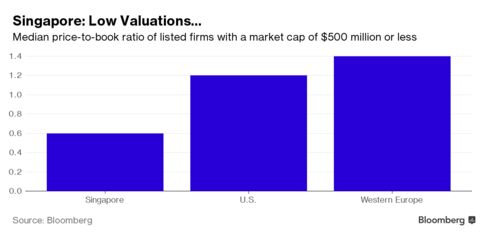
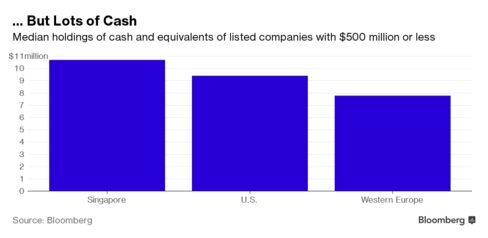
Chart shows that the authorities are pricing S’pore out of fees to themselves, and to the accountants, lawyers etc based here by making S’pore more expensive than HK when it comes to charging cos fees to set-up and maintain here. HK is the leading Asian centre for registrating and maintaining offshore companies outside of the “Sunny places for shady people” to misquote Somerset Maugham.

And S’pore non-executive directors are well paid and do less work vis-a-vis our neighbours.

Non-executive directors (NEDs) in Singapore got the second-highest pay when compared with directors in Malaysia, Indonesia and Thailand, a report by Hay Group showed yesterday. Those in Indonesia were better than S’porean NEDs.

But boards in Singapore also meet the least often, and hold the least number of committee meetings compared with their regional peers.

The management consultancy analysed data collected from 200 large companies in the four countries from 2008 to 2010.

The results showed that at the median level, NEDs from large companies in Singapore were paid US$75,300 in 2010, second to those in Indonesia, who took home US$178,600.

By comparison, NEDs in Thailand and Malaysia received US$46,600 and US$46,300 respectively.

In Indonesia, NEDs take home a substantially higher pay because state-owned companies and some private companies stipulate their pay to NEDs as a percentage of the president-director’s compensation for both the salary and bonus portions. These which are supposedly linked to performance – already made up about four-fifths of NEDs’ pay.

Most of the remuneration for NEDs in Singapore, Thailand and Malaysia is made up of a flat fee, not performance-linked.

The salary of NEDs in the region have been heading higher over the past few years.

In Singapore, the increase was 9% in both 2009 and 2010, while in Malaysia, the NED pay rose 17% in 2009 and 3% in 2010.

In Indonesia, the increase was% 13% and 10% respectively in 2009 and 2010. In Thailand, the NED pay rose 14% in both years.

Thai companies held the most number of board meetings between 2008 and 2010, on a median level. In 2010, an average of nine board meetings were called by the 48 Thai companies reviewed.

Singapore fared the worst, with the 50 companies calling just five board meetings each in 2010. Malaysia’s top companies held six meetings, while those in Indonesia conducted seven.

Indonesian companies also had their audit committees meet more than 10 times a year between 2008 and 2010, which is significantly more often than in Singapore – at four times a year – and Malaysia, at five times a year.

As audit committees have a heavier responsibility than other committees, in Singapore, the chairman and members of the audit committee get higher annual retainers than those in other committees. Thai cos also do something similar

The median tenure of independent directors is the highest in Singapore, which stands at seven years. Malaysia follows with six years, Indonesia is at four-and-a-half years and Thailand has a median tenure of three years.

Proposed revisions to Singapore’s Code of Corporate Governance note that companies must explain the reasons that a director who has served more than nine years on the board is still deemed independent.

Hay Group’s review showed that 62% of the top companies in Singapore have at least one independent director who has served more than nine years on their board.

When will this happen to a S-Chip?

In China, Corporate governance on 22/04/2012 at 7:20 pm

It may be a tiny Chinese educational company worth a little over $200 million. But the ChinaCast Education Corporation has found itself embroiled in a battle worthy of a John Grisham novel.

Its ousted chief executive, Ron Chan, has been accused of aiding in the disappearance of ChinaCast’s chops — ornate corporate seals that are needed to approve everything from paychecks to contracts.

And recently more than a dozen men claiming an association with Mr. Chan burst into the company’s Shanghai office twice, violently carting off several computers from the finance department, according to a United States regulatory filing.

http://dealbook.nytimes.com/2012/04/19/battle-over-a-chinese-company-turns-physical/?src=dlbksb

No wonder S-chips are finding it difficult to get people to be non-executive or independent directors.  And the row between China Sky’s former independent director Yeap Wai Kong and SGX doesn’t help. He took SGX to court in an attempt to quash its public reprimand issued against him in December 2011. The court is hearing the case.

Why UOB is “betterest”?

In Banks, Corporate governance on 06/04/2012 at 7:41 am

Bank results down 4%, CEO’s salary down 18%.

http://www.channelnewsasia.com/stories/singaporebusinessnews/view/1193445/1/.html

Own shares in Haw Par which has stake in UOB.

DBS: Investors don’t like the Indon deal

In Banks, Corporate governance, Indonesia, Temasek on 03/04/2012 at 11:34 am

Well DBS is down 0.44 to 13.74 some 3% from Friday’s close.

Despite all the propoganda from our constructive, nation-building mainstream media, aided and abetted by the wires and most brokers, investors don’t like the Bank Danamon deal. To be fair, investors nowadays don’t like their investee companies doing mega strategic deals (like Pru’s attempted purchase of AIA last year) because the historical numbers (still disputed) seem to show that strategic deals destroy shareholder value.

Well the non-Temasek shareholders of DBS will have an opportunity to reject the deal, if they think that Temasek benefits far more than DBS? BTW, did you know that when DBS bot PosBank from Temasek all that many years ago, it was a great deal for Temasek, not so gd for DBS .

Temasek: Meritocracy at work?

In Corporate governance, Temasek, Vietnam on 02/04/2012 at 6:28 am

So the S’porean MD of Singapore Technologies Telemedia (ST Telemedia), a 100%-owned unit of Temasek, Lee Theng Kiat, is now a president of Temasek, and its general counsel. He is in exalted company as one of the other two presidents was once a contender to be CEO of BoA. http://www.bloomberg.com/news/2012-03-30/temasek-hires-st-telemedia-s-lee-as-president-general-counsel.html

But it was also reported last week by the wires  that Eircom applied for court protection as expected last to allow it to restructure its 3.75 billion euro (S$6.29 billion) debt, a move it said was “necessary and unavoidable”.

The application follows the company’s agreement to support a proposal under which most senior lenders take control of the company from current majority shareholder ST Telemedia and cut its debt by 40 to 50%.

ST Telemedia bought 65% of Eircom in 2009 for 140 million euros in cash and shares. An employee share trust owns the other 35%. Eircom has 4.1 billion euros of gross debt and more than 300 million euros of cash on its balance sheet, giving net debt of around 3.75 billion euros.http://www.reuters.com/article/2012/03/29/us-eircom-idUSBRE82S14R20120329?rpc=401&feedType=RSS&feedName=technologyNews&rpc=401

Lee was the MD of ST Telemedia when Eircom was purchased.

Well the Communist Party and Government in Vietnam are not so forgiving of executives who goof. Nine top officials have been given tough jail sentences for their role in the near-bankruptcy of one of Vietnam’s largest state-owned companies. Err they  were convicted of being directly responsible for a loss of US$43m http://www.bbc.co.uk/news/world-asia-17561109. Peanuts when compared to Euros 140m.

BTW, came across this comment about Merrill Lynch recently, “From July 2007 to July 2008, a total of [US]$19.2 billion vaporized – or [US}$52 million in losses per day!” For the record, Temasek bot into ML in December 2007 and in late July 2008.http://moneymorning.com/2008/07/29/merrill-lynch/

Temasek’s loss ran into billions of US dollars http://online.wsj.com/article/SB124236495798923123.html. The Vietnamese officials would have been hung, drawn and quatered if they had been held responsible for such a loss. Nothing happened to Temasek officials.

Another day, another sucker

In China, Corporate governance on 21/03/2012 at 8:53 am

First it was SGX, then US exchanges, now London’s AIM the target for Chinese IPO scammers?

http://www.reuters.com/article/2012/03/14/ipo-london-china-idUSL5E8E8A2220120314?feedType=RSS&feedName=financialsSector

FBI in US, SIAS, SGX here

In China, Corporate governance on 02/02/2012 at 8:49 am

FBI investigating adviser on Chinese reverse mergers following a spate of problems with these listcos. No such luck here for investors here in S-Chips, despite the well documented problems. Investors only got SIAS and SGX.

http://dealbook.nytimes.com/2012/01/27/f-b-i-searches-offices-of-n-y-adviser-on-chinese-reverse-mergers/?nl=business&emc=dlbkpma1

I mean even HK securities authority seems to be more active in taking action against Chinese listcos (see bit towards end of article).

http://www.bloomberg.com/news/2012-01-30/hong-kong-s-tiger-court-fight-tests-regulator-s-offshore-reach.html

It’s other people’s money, so spend it?

In Corporate governance on 17/01/2012 at 7:21 am

“SSA president Chng Seng Mok hopes the shooters’ poor form will not affect their application into the OPP’s [Olympic Pathway Programme's] 2016 cycle, but he said: “Of course, the SSA must also explain why they didn’t do well.””

Well the shooters were good in the 2010 Commonwealth Games, winning five gold, four silver and five bronze medals to finish as the third best team in the shooting competition in New Delhi. Their form has dropped since then. And two of the three shooters in the OPP’s 2012, have failed to qualify. A third has one more chance (Let’s wish her all the best). The trio performed poorly at the 2010 Asian Games and last year’s SEA Games.

My question is, “If the SSA president was personally paying for the training expenses etc of the shooters, would the president dare say such a thing?” Obviously not because the bad has to been taken with the good, with the latest scores mattering most because they are the best (if very imperfect) indicators of future form. Ask any EPL footie manager.  

Moral hazard: Ain’t only a problem with ministerial salaries, management and bankers’ excesses, and spendthrift, lying, cheating, lazy, violent Greeks. It’s present every time, when tax-payers’ monies are involved. In fact, every time other people’s monies are used.

Barking show dog gets bitten

In Corporate governance on 17/01/2012 at 6:02 am

It had to happen. Someone got tired of SIAS’ posturings and finger pointings and decided to bite back.

www.profitableplots.com

Let’s see if SIAS has anything to say in response to these allegations, some very serious.

Shan Gao Huang-di Yuan (“The mountains are high and the emperor is far away”)

In China, Corporate governance on 16/01/2012 at 6:01 am

It was SGX managers that were keen on China listings in the late 1990s and early noughties. They got their mult—million bonuses, but minority shareholders in many S-Chips got the worms. Now SGX has all kind of rules to try to ensure good corporate governance. But as this shows, the mgt of a Chinese co listed on NASDAQ, doesn’t care a damned abt US laws, confirming the experience of investors here on the attitude of the management of S-Chips to S’pore laws and SGX’s rules.

If ChinaCast again loses in the Delaware courts, the question is, what will it do afterward? The Chinese company could simply refuse to honor the court’s order. It has no assets in the United States, so it could easily ignore any monetary fine. However, it is listed in the United States and is subject to S.E.C. supervision; such an act is likely to crater its stock price. The likelihood of such a response is low, but it appears that ChinaCast’s current management is going to fight this coup to the bitter end. Expect more maneuvering by all parties involved.

There is a wider lesson here. It is hard to know the real facts in this case given the murky nature and distance of the events, but whatever the truth is, investing in companies based in a foreign country is risky not only because the rule of law is weaker, but also because of cultural differences.

Foreign companies are not as familiar with United States practices and laws governing domestic corporations. They are sometimes more willing to push the envelope, either out of cultural inexperience or simple ignorance. ChinaCast itself appears to have been a bit behind the ball in getting good advice.

 Sigh. Taz the scandal, not PM and ministers earning millions. But SGX listing cos that are difficult for S’pore-based investors to monitor, and police.

Sharebuy backs in 2011: Destroying shareholder value

In Corporate governance on 11/01/2012 at 5:38 am

Around 96 companies recorded 3,007 repurchases worth $1.059 billion in 201 according to the managing director, Asia Insider Limited, in his latest weekly BT column.”The number and value of transactions were second highest yearly totals since buybacks were introduced in June 1999, second only to the buybacks during the global recession in 2008.

‘The number and value of transactions in 2011 were sharply higher than the yearly averages of 1,281 trades and $526 million from 2000 to 2010. The heaviest buybacks occurred in the third quarter with 59 companies posting 895 transactions worth $455 million, which accounted for 61 per cent, 30 per cent, and 43 per cent, respectively, of the totals in 2011.

‘The most bullish sector in terms of value was transport with $276 million worth of repurchases in 2011. In terms of number of trades, property stocks recorded 739 transactions in 2011.”

As companies are supposed to buyback shares only when mgt believes that the market undervalues their shares, the  following revelations are absurdly funny:

– “Only 15 out of the 96 [or 16 percent] listed firms that bought back shares recorded gains from their average buyback prices in 2011. The price gains ranged from 5 per cent to 61 per cent with an average increase of 13 per cent.”

– Some 60 firms or 63 per cent of the companies that bought back shares in 2011 saw their share prices drop by 5 per cent to 47 per cent from their average buyback prices with an average fall of 19 per cent.”

Not mgts’ money leh? Hence the failure to stop buback programmes in a bear market?

SMRT: Giving gd corporate governance a bad name

In Corporate governance on 18/12/2011 at 5:43 am

SMRT has the best corporate governance practices among the 30 companies of the Straits Times Index, according to an American consultancy, ST reported yesterday. SMRT did well on matters like compliance with the Code of Corporate Governance, structure of the board, what directors are paid in comparison to employees, and how much information the company discloses about itself and its involvement in community projects and events.

http://www.straitstimes.com/BreakingNews/Singapore/Story/STIStory_745994.html

Obviously the quality of management and public communications, and contingency planning were not among the factors considered.  

Olam International, SingTel, OCBC Bank, SIA Engineering. SIA, Noble Group, Neptune Orient Lines, Sembcorp Industries and Fraser & Neave (who ranked below SMRT in the corporate governance rankings done by this US firm) must hope that they are not tainted with the same brush as SMRT.

Seriously, the last thing the image of corporate governance in S’pore needs is to be associated with SMRT, or for SMRT to be the poster boy of good corporate governance here. Sigh.

And seriouisly, better take the bus (SBS only) the next few days. Who knows what else will happen to SMRT trains or its buses or its taxis.  The latter have not had problems, but better safe than sorry.

Looks like analysts will have to lower their revenue forecasts for SMRT to take account of the coming fines, severance packages for senior managers, and higher maintenace costs.

Even a Rothschild can get screwed in Indonesia

In Corporate governance, Indonesia on 14/12/2011 at 6:46 am

I’m a bull on Indonesia* for all my sins and it hasn’t done me much gd. It is a treacherous place, navigating through opaque regulations, erratic business relationships, changing policies and deeply entrenched corruption.

Nat Rothschild, son of Jacob Rothschild (a semi- retired leading London- based financier), a good dealer-maker and savvy investor has found that out the hard way. He is chairman and a major shareholder of London- listed Bumi plc which  owns a 29% stake in Jakarta- listed Bumi Resources, and 75% of Berau. He wrote in early November a very nasty letter to the CEO of both Bumi compaines (same man), complaining that

–  despite being heavily in debt, Bumi Resources had US$867m of assets that had nothing to do with its core coal business;  and

– these assets were held by “connected parties”.

It seems he has yet to receive an official response.

RElated post:

http://atans1.wordpress.com/2010/12/15/nomura-bullish-on-indonesia/#more-5517

——————————

*Long on Lippo Malls Trust and hoping First Reit’s share price falls so I can buy.

Higher standards expected from BTimes and a Temask-linked group?

In Corporate governance, Media, Temasek on 24/11/2011 at 5:49 am

Recently, K-Reit Asia succeeded in getting unitholder approval for its plan to buy 87.5%  of Ocean Financial Centre (OFC), a prime Grade A Raffles Place office building, and raise some S$976 million through a rights issue (17 for 20) to fund part of the cost. It needs S$1.57 billion to buy from parent company Keppel Land a 99- year lease of the OFC office building. KepLand will see a net gain of about S$492.7 million from the sale. Meanwhile despite the massive rights issue, K-Reit will have leverage of around 42% by end of 2011, more than the Reit sector average of 36%. This at a time of a looming slow down.

Some unitholders questioned

– the price and timing of the deal what with a recession looming;

– that while the building in Raffles Place has a tenure of 999 years with 850 years remaining on the lease, but KepLand is only selling a 99-year lease;

– why K-Reit is paying its manager (which is owned by KepLand) an acquisition fee, though it is buying the asset from its parent company;

– the independence of the manager.

But dissenting unitholders have to accept much of the blame in allowing K-Reit an easy ride at the EGM when resolutions were passed with a show of hands. The chairman of K-Reit rejected a call to call for a poll at the EGM presumably because there was no five-member call for a poll or a request by unitholders controlling 10% voting rights. 

If dissenting unitholders are not prepared to stand up and be counted, they deserve to be bullied.

Business Times decided to raise a stinker, “This isn’t the first time – and probably it won’t be the last – that issues like these arise at a Reit. For some time now there has been growing disquiet among corporate watchers about weaknesses in the corporate governance structures in Singapore Reits where the Reit sponsor wholly owns the Reit manager, and also holds a large stake in the Reit.” Well BT should remember that there is a bear market, and issues abt corporate governance always rise when investors lose money.

“[C]ases of sponsors selling properties to Reits have raised concerns about conflict of interest, and unitholders have often questioned the purchase of these assets and how they were priced”. BT does not point out that

– it is public knowledge that here the Reit sponsor wholly owns the Reit manager, and also holds a large stake in the Reit; and

 – in the K-Reit deal and other deals involving possible conflict of interests, the selling unitholder has by law to abstain from voting; and

– there have to be independent valuations.  

“There is also the need to have more transparent structures to pay Reit managers and to tie these more closely to performance”, according to BT. It’s not as though these are hidden from investors or made retrospective. They are publicly available info.

Sorry BT. A piece of rubbish.  

Having said all this, a Temasek-linked group like Keppel should set an example for others to follow. At the very least, K-Reit should have allowed a poll on the resolutions, rather than a show of hands. After all, the law is likely to be changed to make polls mandatory at general meetings. “Justice must not only be done, but seen to be done” and “Caesar’s wife must be above suspicion”.

And K-Reit chairman Tsui Kai Chong’s comment that “Our father organisation, Keppel Land, is only willing to sell it to us for 99 years”, tells me that, at the very least, he has an “attitude” problem: deferring to his KepLand where  he is an independent director.

Follow

Get every new post delivered to your Inbox.

Join 103 other followers